
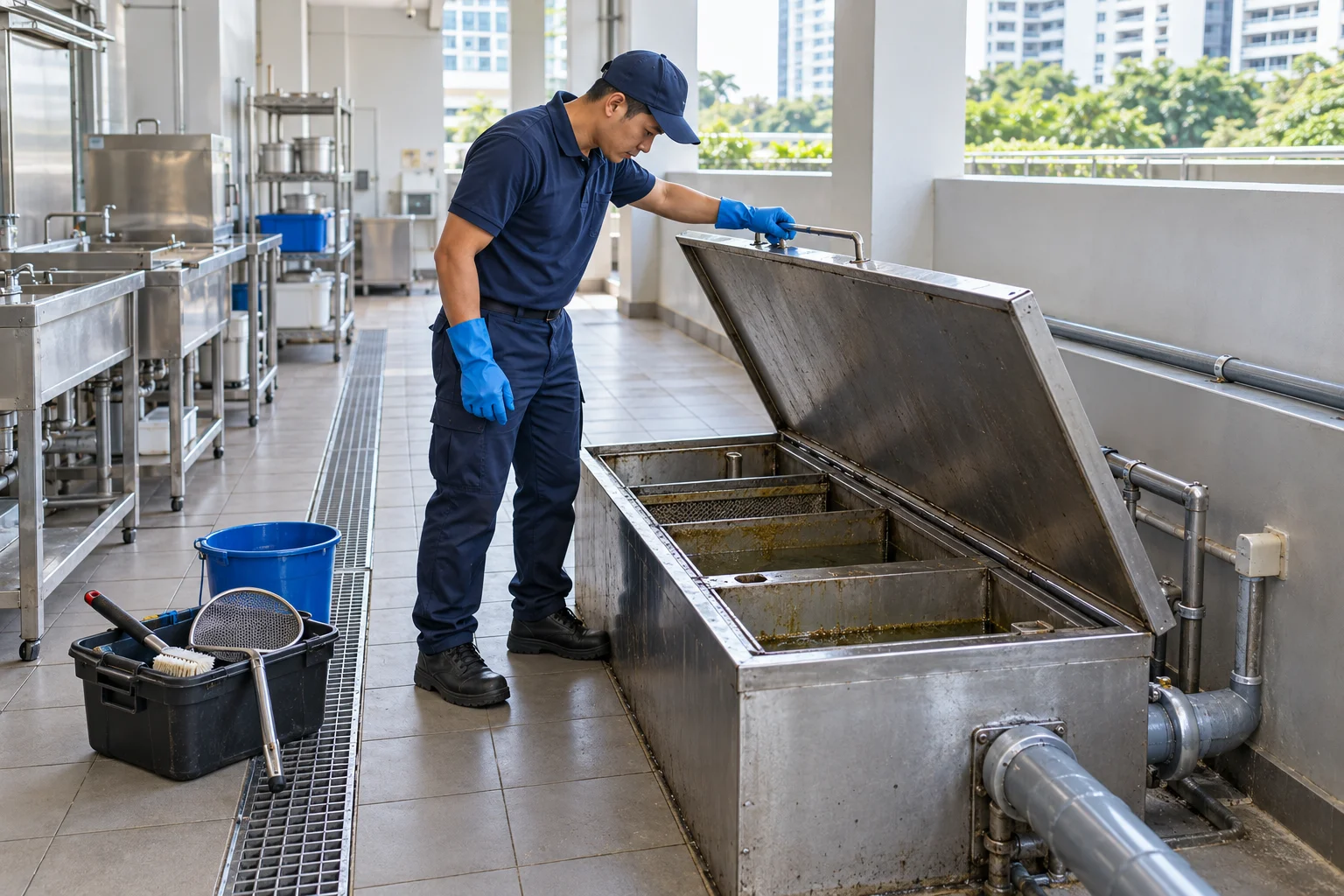
In Singapore’s thriving food and beverage sector, running a commercial kitchen requires meticulous attention to hygiene, environmental compliance, and wastewater management. From standalone restaurants and central kitchens to hawker stalls, food courts, and hotel banquet facilities, the proper interception and disposal of Fats, Oils, and Grease (FOG) is not merely good housekeeping—it is a strict statutory requirement under Singapore law.
Discharging untreated grease into the public sewer system causes severe blockages, pipe corrosion, toxic sewer gas buildup, and public health hazards. The Public Utilities Board (PUB) actively enforces the Sewerage and Drainage (Sanitary Works) Regulations, conducting spot audits on F&B premises across the island.
This comprehensive guide explains how grease traps function, the regulatory mandates every F&B operator must follow, recommended maintenance schedules, and how to maintain compliant service records.
How Commercial Grease Traps Function
Grease interceptors are passive gravitational separation tanks placed between kitchen discharge points (pot sinks, dishwashers, floor gullies) and the sanitary sewer. They exploit the natural physical principle that animal fats and vegetable oils are less dense than water (specific gravity ~0.8 to 0.9), while heavier food solids are denser.
The Three-Stage Separation Process
- Solids Straining: Wastewater enters through an initial inlet baffle or perforated stainless steel strainer basket where coarse food particles, bones, and vegetable peels are filtered out.
- Cooling & Gravity Separation: As warm kitchen water enters the separation chamber, water flow velocity drops sharply. The cooling effect allows liquid fats and greases to congeal, float to the surface, and form a thick floating scum blanket.
- Underflow Discharge: Clarified graywater beneath the floating grease layer flows under an outlet baffle or inverted elbow pipe and discharges safely into the sanitary drainage system.
When grease interceptors are neglected, the floating scum layer and bottom sludge layer thicken until the separation capacity is completely eliminated. Grease then escapes directly into downstream private lines and the public sewer.
Singapore Regulatory Requirements (PUB & NEA)
Every commercial food establishment in Singapore is subject to strict regulatory oversight regarding grease interception and waste disposal:
#1. Mandatory Sizing and Design Approvals
Under PUB regulations, grease interceptors must be sized according to peak kitchen discharge rates, seat count, and fixture units. Sizing must be certified by a Qualified Person (QP) or Licensed Plumber (LP) to ensure adequate hydraulic retention time (typically 20 to 30 minutes minimum at peak flow).
#2. Recommended Cleaning Frequency: Every Two Weeks
PUB officially recommends that commercial grease traps be thoroughly serviced and evacuated at least once every two weeks. For high-volume kitchens (such as deep-frying stations, BBQ eateries, hotpot restaurants, and central catering kitchens), weekly or bi-weekly servicing is often necessary to prevent scum blanket thickness from exceeding 25% of the total tank liquid depth.
#3. Mandatory Engagement of NEA-Licensed General Waste Collectors
Grease trap waste contains heavy organic pollutants and cannot be dumped into municipal storm drains, trash bins, or toilet bowls. Food operators are legally required to engage an NEA-licensed General Waste Collector (GWC) approved for Class B (grease interceptor waste) collection. The waste must be hauled in dedicated vacuum tankers to authorized treatment and recycling facilities (such as co-digestion biogas plants).
Consequences of Inadequate Grease Trap Maintenance
Failing to maintain grease interceptors exposes operators to serious financial, operational, and legal penalties:
- PUB Fines and Prosecution: Discharging trade effluent exceeding allowable regulatory discharge limits (e.g., FOG limit of 100 mg/L for sewer discharge) carries hefty statutory fines under the Sewerage and Drainage Act, with repeat offences risking court action.
- Sudden Kitchen Flooding & Closure: Grease solidify like concrete inside drainage pipes (creating "fatbergs"). A backed-up grease line forces kitchen operations to shut down immediately, causing lost revenue, spoiled food inventories, and customer disruption.
- Pest Infestation & Severe Odours: Stagnant, rancid grease emits volatile fatty acids and foul sewer gases that attract cockroaches, rodents, and flies, endangering food safety certifications.
Professional Grease Trap Servicing Protocol
A compliant grease trap cleaning visit by Owen Jetting Services includes a comprehensive multi-step procedure:
- Pre-Cleaning Safety & Area Protection: Cordoning off work zones and inspecting seals and gasket integrity to prevent kitchen contamination.
- Complete Vacuum Pump-Out: Utilizing high-suction vacuum tanker hoses to evacuate the entire floating grease scum layer, suspended graywater, and settled bottom food sludge.
- Scraping and High-Pressure Washing: Manually scraping internal baffle plates, chamber sidewalls, and weir edges, followed by pressure washing to remove stubborn grease scale.
- Strainer Basket Cleaning: De-clogging and sanitizing the stainless steel basket filter.
- Inspection of Internal Components: Checking baffle position, inlet/outlet T-pieces, and lid hermetic seals for wear or corrosion.
- Water Refilling & Odour Trap Priming: Refilling the tank with clean water to establish the water seal and prevent sewer gases from venting back into the kitchen.
- Service Documentation: Issuing formal service chits and disposal records for submission during PUB and NEA hygiene audits.
Best Kitchen Habits to Minimize Grease Trap Strain
While regular pumping is mandatory, adopting source-control kitchen habits significantly improves drain longevity:
- Dry Scraping: Direct kitchen staff to wipe down plates, woks, and cooking pans with paper towels before dishwashing.
- Dedicated Waste Oil Recycling: Never pour deep-fryer oil into sinks. Store used oil in sealed steel drums for collection by licensed biofuel recyclers.
- Avoid Drain Enzyme "Miracle Cleaners": Many off-the-shelf chemical degreasers simply emulsify grease temporarily, only for the grease to re-solidify further down in public sewer mains, causing severe penalties.
Partner with Owen Jetting for F&B Grease Management
Owen Jetting Services provides licensed, scheduled grease trap cleaning and vacuum tanker services for restaurants, malls, hotels, and food factories across Singapore. Contact our team to establish a worry-free bi-weekly maintenance schedule and ensure 100% regulatory compliance.
Frequently asked questions
Who should carry out grease-trap cleaning?
PUB advises using an NEA-licensed general waste collector. Confirm the appointed collector and keep the service documentation.
Is an odour enough to diagnose the fault?
No. Record the location, drainage behaviour and cleaning history. Ask for an assessment rather than assuming the trap is the only cause.