
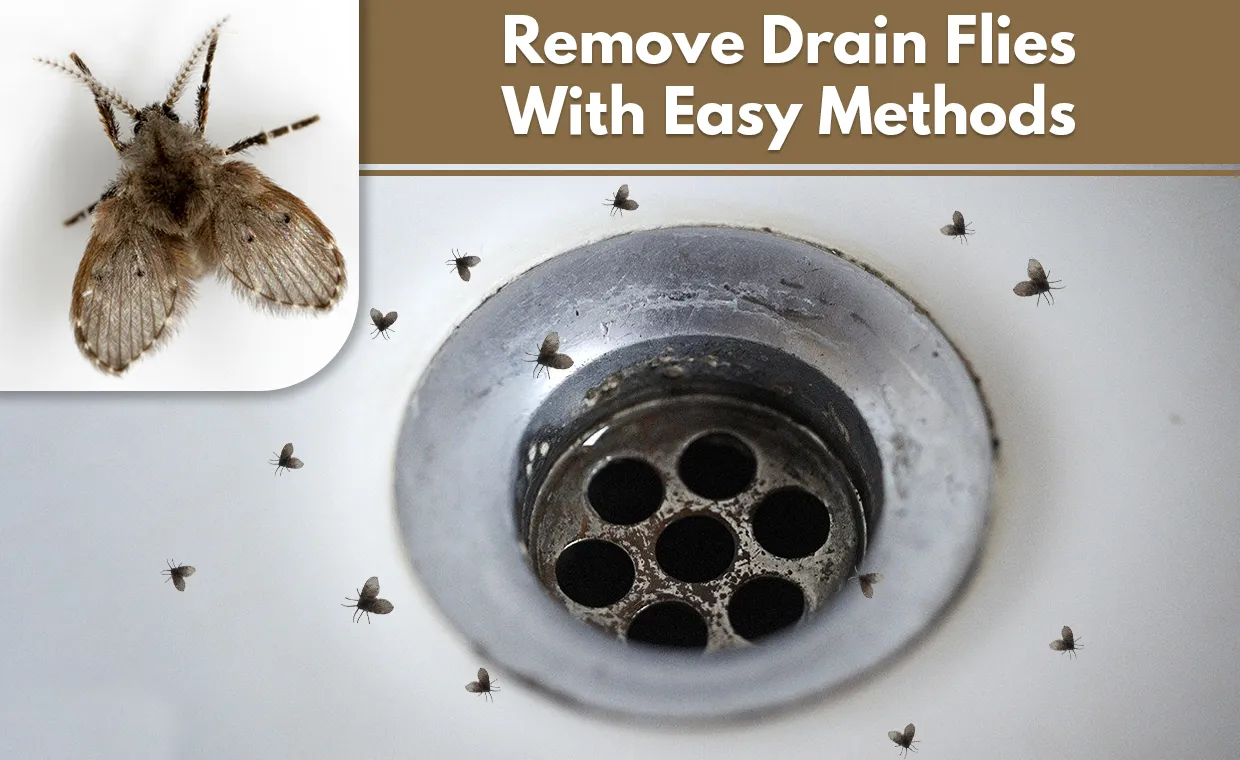
What are drain flies?
Drain flies, also called moth flies, are small, fuzzy flies often found near sinks, showers and floor drains. Their larvae live in moist organic material, including the slimy film inside drains.
Find the source
Check bathroom, kitchen and floor drains, damp areas and leaking pipes. To check a suspected drain, loosely place clear tape over part of the opening overnight, sticky side down. Flies caught on the tape may identify the source. Do not seal a drain needed for use.
Clean away the buildup
Remove the accessible drain cover and use a stiff drain brush to scrub the slimy film from the inside surfaces. Remove debris and flush with water, then clean and replace the cover. Wear gloves and wash your hands afterwards.
A biological drain cleaner may help break down remaining organic material when used according to its label. Bleach or boiling water alone may not remove the film where larvae live. Never mix cleaning chemicals.
Prevent drain flies returning
Clean drain covers and accessible surfaces regularly, remove food scraps and hair, and fix leaks or standing water. Keep water traps in seldom-used drains supplied with water where appropriate.
When to call a professional
If flies persist after cleaning, check for another breeding site. Slow drainage, recurring blockages, sewage odours or signs of leaks warrant a plumbing assessment. Contact a pest management professional if the source is inaccessible or remains unclear.
Frequently asked questions
Will bleach get rid of drain flies?
Bleach alone is not a reliable solution because it may not remove the organic film where larvae live. Physically clean accessible buildup and never mix cleaning products.
Do drain flies bite?
Drain flies are primarily a nuisance and do not bite people.