
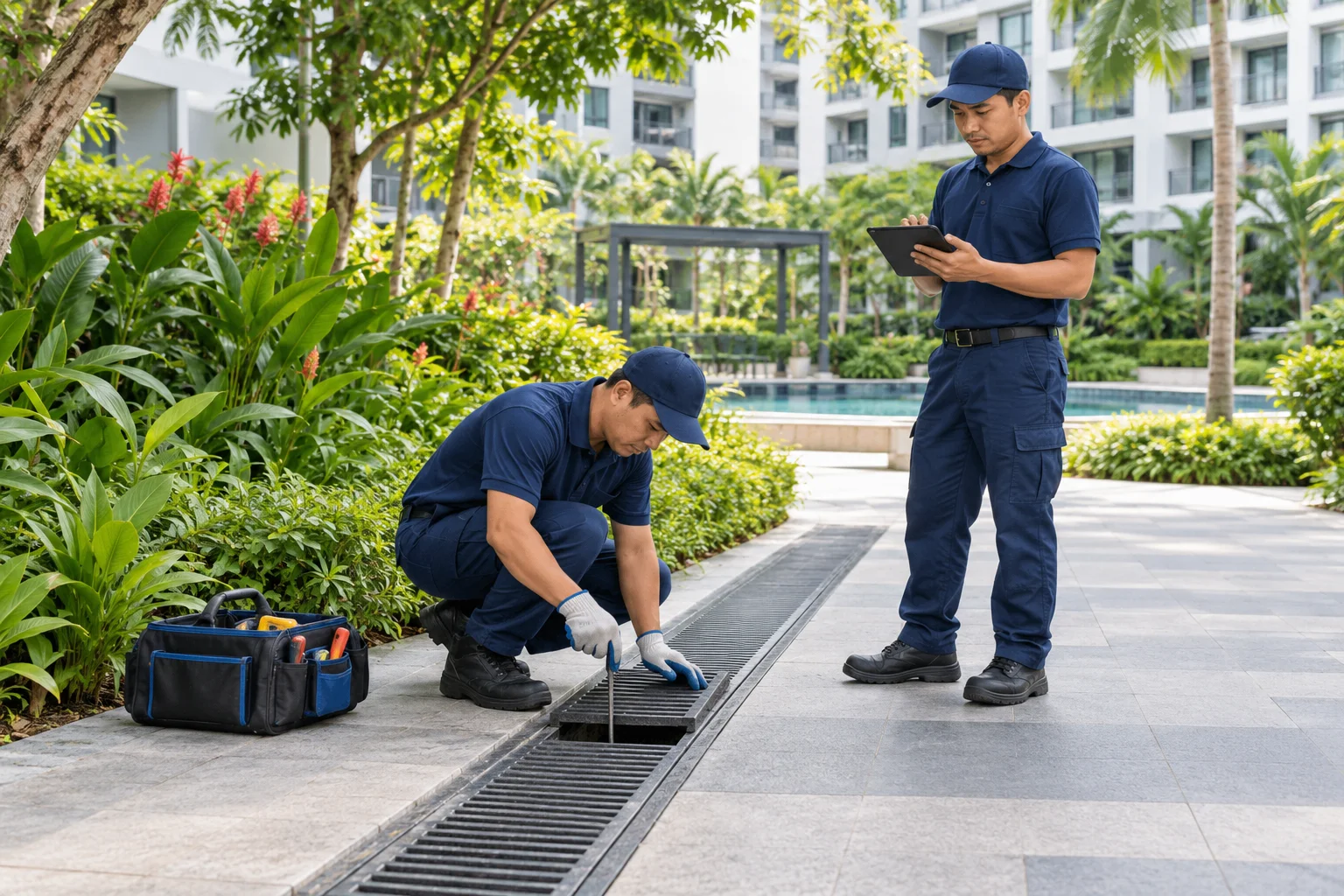
Singapore’s residential landscape is characterized by high-density vertical living in private condominiums and Housing & Development Board (HDB) estates, alongside multi-storey landed properties in historic and private enclaves. In both settings, the drainage and sanitary stack networks operate continuously behind walls, ceiling plenums, and subterranean ground slabs.
Too often, property management teams and homeowners adopt a reactive "wait-until-it-chokes" mindset. In a high-rise condominium, a sudden stack blockage on a Sunday afternoon can cause raw wastewater to erupt through lower-floor floor traps and toilet bowls, destroying hardwood floors and resulting in thousands of dollars in property damage and insurance disputes.
Preventive drain maintenance transforms building management from frantic emergency response into predictable, budgeted asset protection. In this guide, we break down common drainage failure points, estate management strategies for MCSTs, and best practices for private landed homeowners.
Anatomy of Residential Drainage Systems in Singapore
Understanding how building wastewater travels is the first step toward effective maintenance:
#1. Vertical Soil and Waste Stacks
Cast iron or high-impact uPVC vertical stacks carry blackwater (toilet soil) and graywater (kitchen sinks, showers, wash basins, floor traps) downward from upper floors. In high-rise towers, multi-storey drops generate intense hydraulic kinetic energy, air pressure fluctuations, and turbulence.
#2. Suspended Basement Collector Headers
Vertical stacks terminate in horizontal collector lines, often suspended beneath basement car park ceilings or buried within podium transfer slabs. Because horizontal lines lack gravity's downward acceleration, they are prime locations for fat, hair, and scale accumulation.
#3. Perimeter Storm Drains & Sump Pits
Surface rainwater collection networks, driveway scupper drains, and basement sump pump chambers prevent tropical monsoon deluges from flooding residential basements and lift pits.
#4. Inspection Chambers (IC) & Boundary Traps
At ground level, private drainage lines converge at buried inspection chambers before discharging through a boundary trap (water seal) into PUB’s municipal sewer main beneath the public road.
Top Causes of Chronic Drainage Failures
Over years of continuous residential occupancy, distinct failure patterns emerge across Singapore properties:
- Uric Acid and Hard Water Scale: In soil stacks and urinal discharge lines, mineral salts and uric acid precipitate into rock-hard encrustations ("struvite" and calcium carbonate scale) that gradually narrow 100mm pipes to a tiny trickle.
- Kitchen Grease Coagulation: Even in non-commercial residential towers, collective dishwashing deposits cooking fats, butter, and dressings into kitchen waste risers. Over months, these congeal along pipe crowns and horizontal runs.
- Tree Root Infiltration in Landed Compounds: Landed homes surrounded by garden landscaping frequently suffer root intrusion into clay or PVC joint collars, causing sudden backflows during heavy rains.
- Ground Settlement & Joint Dislocation: Aging residential estates experience gradual ground subsidence, creating low spots ("bellies") in horizontal collector lines where standing sludge stagnates.
Preventive Maintenance Strategies for MCST Estate Managers
Managing Agent (MA) teams and Management Corporation Strata Title (MCST) councils should implement a structured preventive maintenance protocol:
#1. Scheduled High-Pressure Hydro-Jetting (Annual / Semi-Annual)
Rather than waiting for chokes, schedule routine rotary water jetting for all main horizontal basement collector lines and lower stack transition elbows every 6 to 12 months. Specially calibrated retro-jet nozzles scour pipe walls back to full original diameter without damaging aging cast iron or uPVC.
#2. Regular Storm Drain and Sump Pit Desilting
Prior to the peak Northeast Monsoon (November to January) and Southwest Monsoon (June to September) seasons, thoroughly desilt all perimeter apron drains, silt traps, and submersible pump sumps to ensure 100% discharge capacity during intense cloudbursts.
#3. Establish Clear Drainage Schematics & Chamber Registers
Ensure the estate maintains up-to-date As-Built architectural and plumbing plans. Map every buried manhole cover, grease trap, and inspection chamber, ensuring access covers are not permanently paved over by landscape renovation or tarmac re-surfacing.
#4. Implement a Resident Reporting & Incident Logbook
Train facility staff and security guards to log early warning signs reported by residents: gurgling sounds from lower-floor floor traps, slow sink drainage, foul sewer odors in basement car parks, or water weeping from pipe hangars. Early diagnosis prevents catastrophic full-stack backups.
Practical Advice for Landed Homeowners
Private landed properties (terraces, semi-detached, bungalows) possess autonomous private drainage systems up to the boundary connection:
- Locate Your Inspection Chambers: Know where your compound’s inspection chambers (ICs) and sewer boundary trap are located. Keep manhole covers accessible, not covered by timber decking or artificial turf.
- Beware of Invasive Tree Species: Avoid planting water-seeking ficus, weeping fig, or bamboo species directly above underground sewer alignments.
- Install Floor Trap Hair Strainers: Simple removable mesh strainers in shower floor traps prevent hair and soap scum from binding with kitchen grease downstream.
- Periodic Flow Check: Open chamber covers once every 6 months while running taps to verify water moves swiftly through the channel without standing wastewater or sediment buildup.
Protect Your Property Assets with Owen Jetting
Owen Jetting Services partners with MCST managing agents, commercial property managers, and private homeowners across Singapore. From scheduled high-pressure water jetting contracts to emergency choke intervention and robotic CCTV diagnostics, our certified plumbing team keeps your building’s drainage flowing smoothly year-round.
Frequently asked questions
What details help with a recurring problem?
Record the affected location, dates, nearby fixtures and earlier work. Photos of accessible areas can help explain the pattern.
Should a contract promise a fixed saving?
Compare the scope and service history instead. The outcome depends on the property and the cause of its drainage problems.