
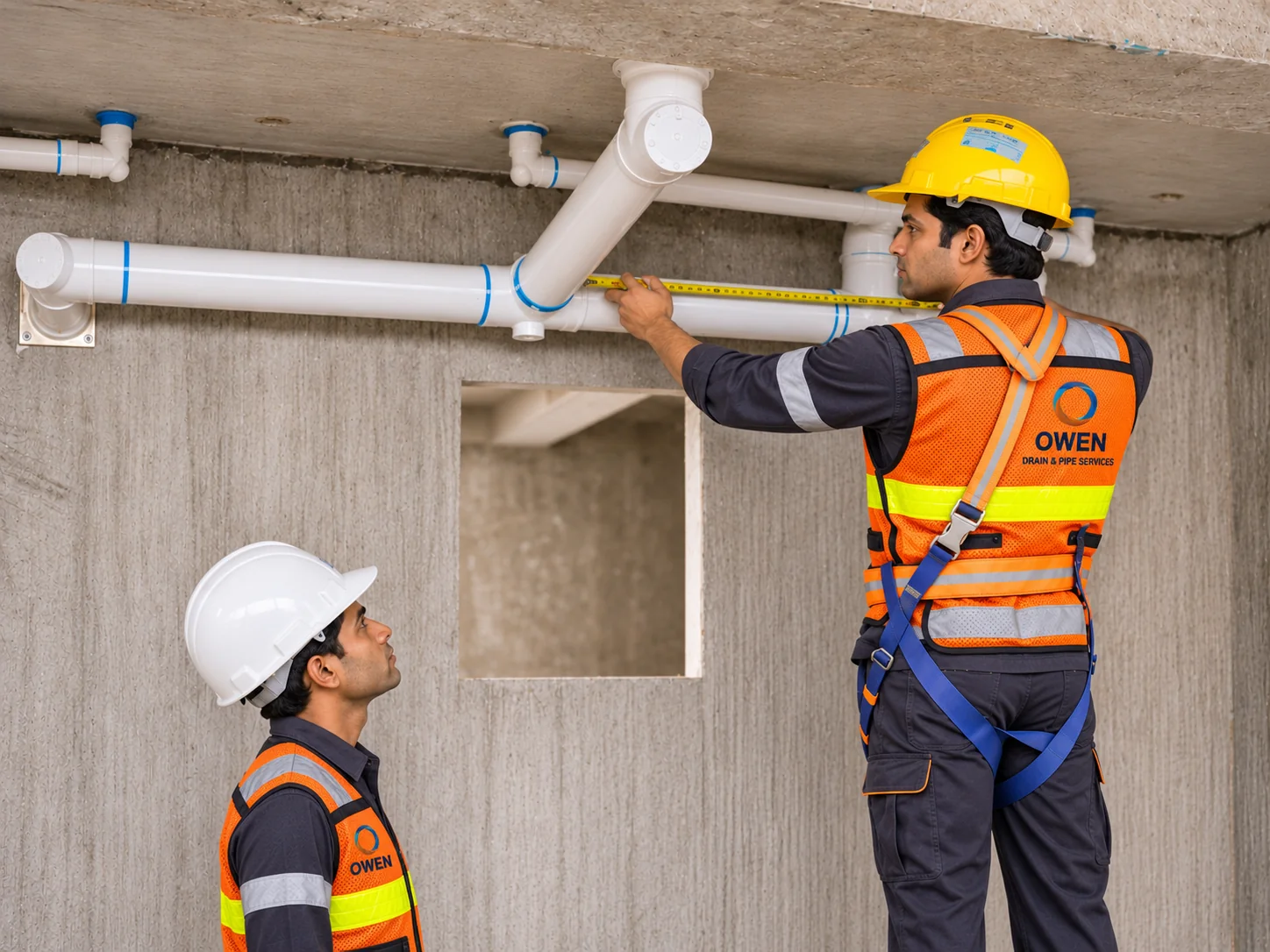
What plumbing & sanitary works include
Water supply and sanitary drainage perform opposite but equally critical roles in every property. Potable water systems operate under pressure to deliver clean drinking water, while sanitary plumbing relies on gravity, venting, and water traps to safely remove wastewater without allowing sewer gases to escape.
Our licensed plumbing personnel carry out installations, replacements, and repairs across domestic, commercial, and industrial facilities in strict compliance with Singapore Public Utilities Board (PUB) regulations.
Key Capabilities & Standards
- Potable water supply pipework, valves, pressure reducing valves, and meters
- Sanitary discharge stacks, waste pipes, vent lines, and floor trap assemblies
- Toilet bowl, urinal, cistern, washbasin, and sink replacements and repairs
- Concealed water leak detection, pipe tracing, and localized repairs
- Renewal of corroded copper, galvanised iron, PPR, or uPVC pipe sections
Seven-stage professional plumbing workflow
Stage 1: Record symptoms & identify system. Determine whether the issue involves pressurized potable water supply or gravity sanitary drainage. Check for pressure drops, dampness, slow drainage, or sewer smells.
Stage 2: Inspect and diagnose. Examine exposed joints, isolation valves, and bottle traps. Use acoustic leak detectors or moisture meters for concealed pipe runs, and CCTV cameras for drainage stacks.
Stage 3: Confirm scope & compliance. Verify whether regulated plumbing requires formal PUB Licensed Plumber endorsement, and ensure replacement materials match site specifications.
Key Capabilities & Standards
- Accurate differentiation between pressurized supply leaks and gravity drainage faults
- Non-destructive acoustic and electronic leak detection for concealed pipework
- Material compatibility checks across copper, stainless steel, PPR, and uPVC systems
- Verification of PUB licensing requirements for regulated sanitary works
Isolation, repair & system testing
Stage 4: Isolate and protect. Shut off the relevant sub-meter valve or localized fixture stopcock, drain residual water, and protect surrounding cabinetry and electrical fittings.
Stage 5: Repair or replace. Renew corroded pipe sections, failed compression fittings, leaking valves, or cracked trap assemblies using approved materials and fittings.
Stage 6: Test completed system. Re-pressurize supply lines to test for weeping joints; execute functional flow tests and check trap water seals across sanitary fixtures.
Stage 7: Handover. Demonstrate proper operation to the client, provide maintenance guidance, and leave the work zone clean and reinstated.
Key Capabilities & Standards
- Safe isolation prevents water damage to flooring, cabinetry, and electrical equipment
- Approved fittings meeting Singapore Standards (SS) and PUB water fitting guidelines
- Pressure testing supply lines and hydraulic flow checks on all sanitary drains
- Clean reinstatement of access panels and clear explanation of completed repairs
Regulatory compliance & PUB licensing standards
In Singapore, regulated water service and sanitary works must be performed or supervised by a PUB Licensed Plumber (LP). Simple works—such as replacing tap washers, changing flexible hoses, or clearing localized sink traps—do not strictly require licensing, but complex pipe alterations, new connections, and stack repairs do.
Our team adheres strictly to the PUB Code of Practice on Sewerage and Sanitary Works and Water Services regulations, ensuring your plumbing installations are durable, leak-free, and legally compliant.
Key Capabilities & Standards
- PUB Licensed Plumber oversight for all regulated water and sanitary works
- Strict adherence to Singapore Code of Practice on Sewerage & Sanitary Works
- Use of approved water-saving fittings bearing the Singapore WELS tick ratings
- Accurate submission of statutory endorsement documentation where required
Tested before the job is handed over
After installation or repair, the affected system is brought back into active service and checked under operating pressure. We verify that fixtures discharge freely, water traps maintain an airtight water seal, and no weeping occurs at newly installed joints.
Our transparent pricing and clear warranty provide property owners, landlords, and facility teams with reliable, lasting plumbing solutions.
Key Capabilities & Standards
- Hydrostatic pressure checks on potable lines to ensure zero weeping joints
- Trap seal depth verification to prevent sewer gases entering living spaces
- Itemized quotation detailing parts, labor, and warranty coverage
- Practical advice on maintaining fixture longevity and water efficiency
Frequently asked questions
Why does my floor trap emit a foul sewer smell?
Floor traps use a water barrier to block sewer gases. If the trap water evaporates, if the anti-mosquito valve is jammed, or if there is a downstream drainage blockage, sewer air can enter the room. Inspecting the seal and flushing water usually resolves simple trap dryness.
Can a leaking pipe concealed inside a wall be repaired?
Yes. Acoustic or thermal leak detection pinpoints the exact leak location, allowing targeted opening rather than widespread wall hacking. Severely corroded pipe sections may justify rerouting or full renewal.
Do all plumbing jobs require a PUB licensed plumber?
Not every minor task. PUB lists specific simple works exemptions—such as replacing tap washers, flexible hose connections, and clearing surface clogs. However, altering main supply pipes, sanitary stacks, or installing new fixtures requires a PUB Licensed Plumber.
Discuss your site with Owen
Share the location, the symptoms and any access restrictions. Our team can help clarify the next step and the scope of work.