
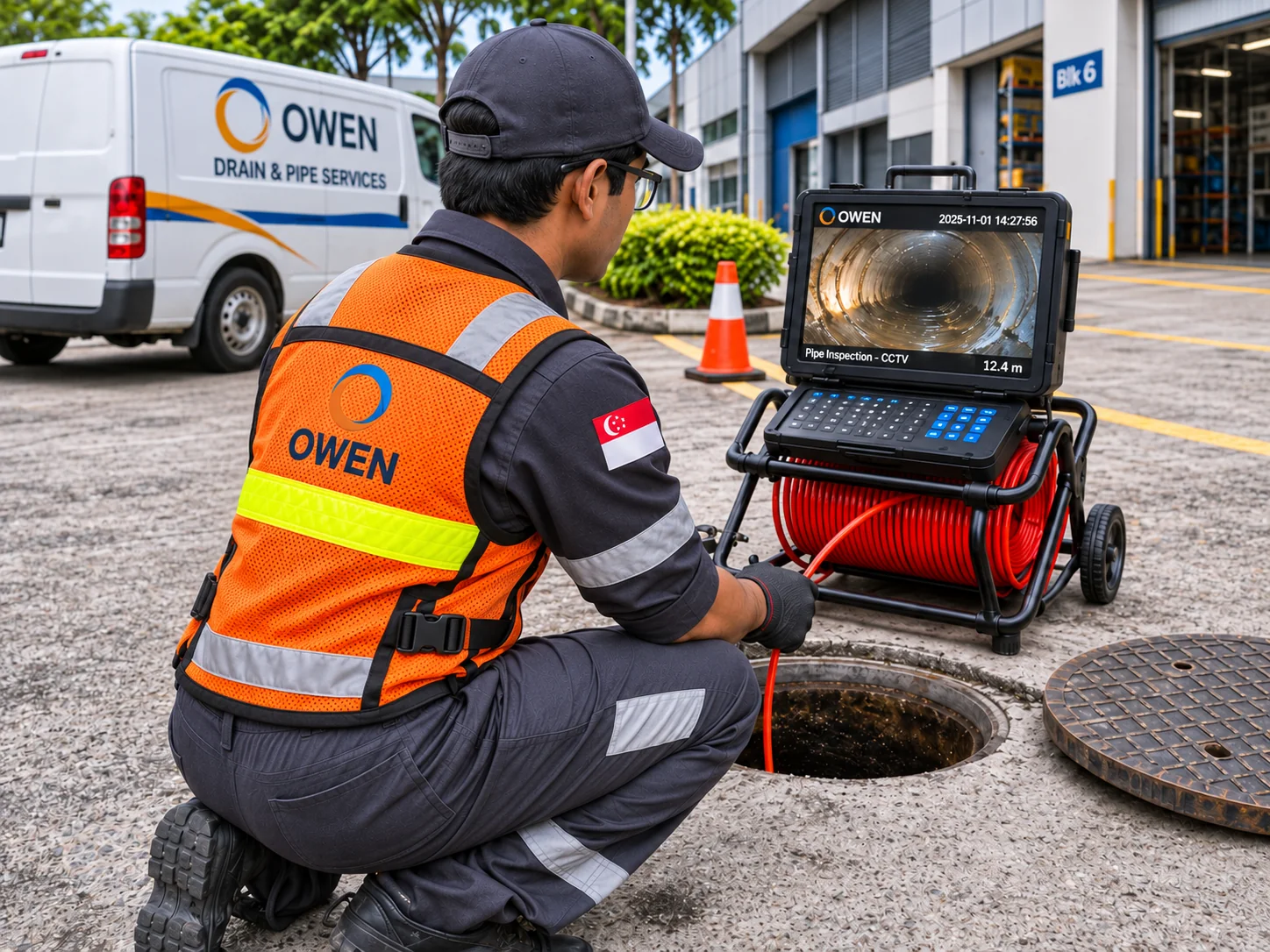
What CCTV pipe inspection can reveal
When a drain repeatedly chokes, repeatedly clearing the same line without investigating the underlying cause becomes costly and frustrating. A CCTV pipe inspection allows technicians to visually examine pipe interiors in real time.
Our high-definition robotic crawlers and flexible push-rod scopes distinguish simple grease accumulation from structural defects, joint displacements, tree root intrusion, and collapsed sections.
Key Capabilities & Standards
- Pinpoints pipe wall cracks, fractures, corrosion, and structural deformation
- Identifies tree root penetration through joint collars and mortar rings
- Detects displaced or separated socket joints and failed rubber seals
- Reveals pipe bellies (sags) causing chronic standing water and sediment deposition
- Identifies unapproved drainage tie-ins, foreign debris, and heavy calcified scale
Six-stage professional inspection workflow
Stage 1: Scope the inspection. We confirm affected outlets, recurring symptoms, review site drainage schematics, and identify accessible inspection chambers or cleanout eyes.
Stage 2: Prepare access point. The team safely opens the chamber, assesses atmospheric safety, and removes loose debris. If lines are choked with heavy blackwater, preliminary jetting is conducted to ensure optical clarity.
Stage 3: Choose camera system. Push-rod scopes are deployed for smaller lateral lines (50mm–150mm), while motorized robotic crawlers with pan-and-tilt heads inspect main sewers (150mm–1,000mm).
Key Capabilities & Standards
- Consultation and review of site architectural drainage drawings
- Atmospheric gas testing and safe chamber opening procedures
- Preliminary hydro jetting when heavy sludge obscures camera optics
- Selection of push-rod or robotic crawler cameras based on pipe diameter
Live observation, defect coding & reporting
Stage 4: Advance and observe. The camera advances through the line while high-definition color footage is displayed on a mobile workstation, tracking precise distance via digital on-screen chainage counters.
Stage 5: Mark findings & recommend action. Defects are logged with exact chainage measurements, distinguishing washable deposits from structural damage requiring repair.
Stage 6: Issue results & deliverables. Clients receive indexed MP4 video footage, high-resolution defect photographs, and an engineering summary detailing remedial recommendations.
Key Capabilities & Standards
- Real-time HD color video display with digital on-screen distance counters
- Built-in 512Hz sonde transmitter pinpoints exact ground depth and defect location
- Detailed photographic defect logs with severity classification
- Actionable recommendations: targeted jetting, localized relining, or repair
Pre-purchase, handover & baseline surveys
CCTV surveys are essential during commercial tenancy takeovers, property acquisitions, and before and after major construction or piling works. Documenting baseline pipe conditions protects asset owners against liability for pre-existing pipeline damage.
Our formal inspection reports are recognized by building management councils (MCST), architects, civil contractors, and Singapore statutory authorities.
Key Capabilities & Standards
- Pre- and post-construction baseline surveys to protect against disputed liability
- Tenancy handover inspection confirming clean, intact sanitary infrastructure
- Accepted by MCST management councils, town councils, and engineering consultants
- Non-destructive investigation eliminating exploratory floor hacking and excavation
Important limitations & diagnostic integrity
CCTV cameras record visible internal conditions. Submerged lines with heavy stagnant wastewater or thick sediment must be flushed to ensure accurate visibility. Additionally, sharp 90-degree elbows or collapsed sections can restrict camera advancement.
Our technicians interpret visual data realistically, combining camera findings with hydraulic flow tests to provide practical, reliable guidance.
Key Capabilities & Standards
- Heavy standing water or thick sludge requires pre-clearing for optical clarity
- Severe collapsed conduits or non-negotiable bends establish physical survey limits
- Combines camera footage with hydraulic tests for comprehensive diagnostic accuracy
- Direct integration with our jetting and repair fleet for immediate remedial work
Frequently asked questions
Do walls or floors need to be hacked for a CCTV inspection?
No. CCTV cameras enter through existing access points such as inspection chambers, floor traps, or cleanout plugs. Excavation or hacking is only needed if there is no usable access or if a permanent physical repair is required.
Can the camera identify the exact cause of repeated chokes?
Yes. In the vast majority of cases, CCTV footage clearly distinguishes removable grease or silt accumulation from structural defects like cracked pipes, joint offsets, or tree root intrusion.
Should CCTV inspection happen before or after jetting?
Both approaches have value. Conducting CCTV beforehand identifies structural risks and blockage location; inspecting after jetting provides a crystal-clear survey of the cleaned pipe wall to verify structural condition.
Discuss your site with Owen
Share the location, the symptoms and any access restrictions. Our team can help clarify the next step and the scope of work.