
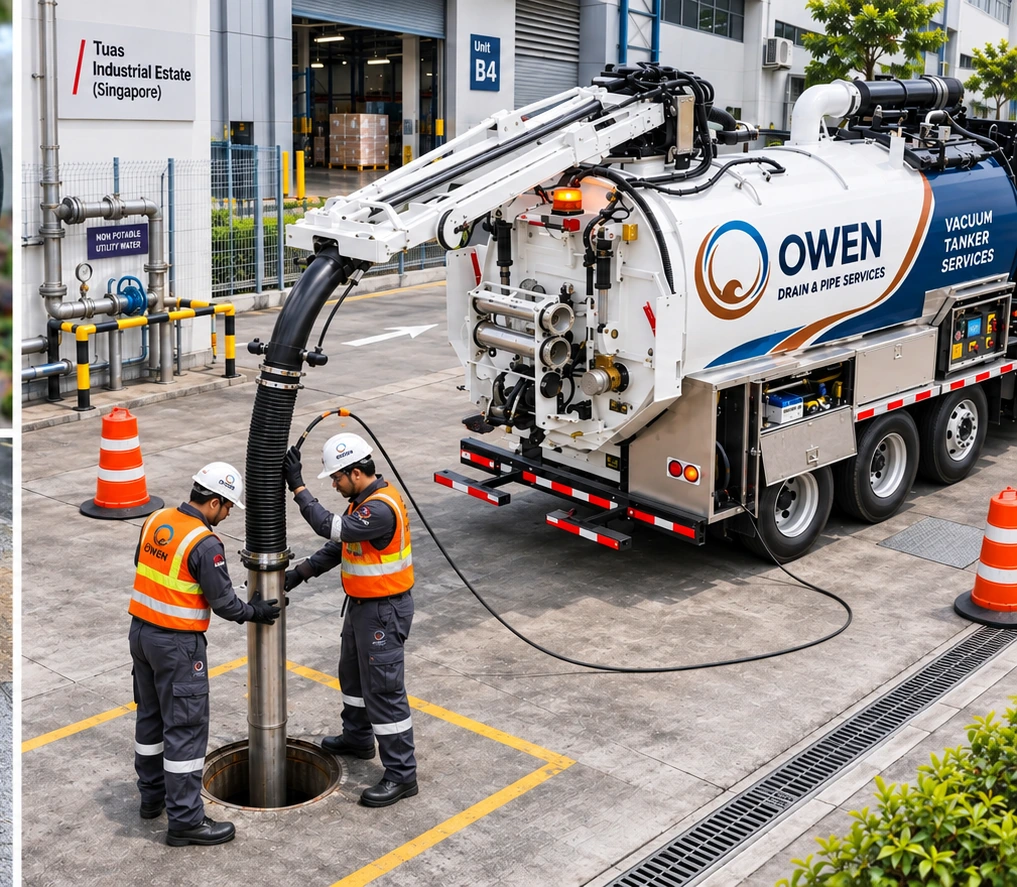
Deep extraction, not just surface cleaning
A sealed vacuum tanker system uses a heavy-duty suction pump and reinforced hoses to draw wastewater, thick sludge, grease slurry, and heavy silt directly into an onboard holding tank. It is designed for settled waste that cannot or should not be pushed farther down a drainage line.
Pumping heavy waste into a collection vehicle is more responsible and effective than flushing it downstream, where it risks triggering municipal sewer chokes and severe environmental penalties.
Key Capabilities & Standards
- High-power vacuum suction extracts thick slurry, heavy sediment, and settled sludge
- Prevents settled solids from being washed into downstream public sewers
- Sealed containment ensures odor-controlled, hygienic waste extraction
- Essential for deep basement sumps, grease interceptors, and pump chambers
Examples of collected material
Our vacuum tankers service a wide variety of commercial, residential, and industrial containment facilities across Singapore. Waste classification, site vehicle access, and legal disposal routes are confirmed prior to collection.
All collected waste is transported to authorized receiving facilities in strict compliance with National Environment Agency (NEA) waste handling regulations.
Key Capabilities & Standards
- Fats, oils, and grease (FOG) slurry from commercial kitchen grease interceptors
- Heavy silt, sand, and grit settled in stormwater chambers and culverts
- Wastewater, scum, and sludge from ejector sumps, septic tanks, and lift pits
- Industrial non-hazardous liquid slurry and wash-bay collection sumps
Six-stage professional tanker workflow
Stage 1: Identify waste & site constraints. Confirm waste type, volume, vehicle height clearance, hose route, parking access, and NEA waste disposal class.
Stage 2: Set up tanker safely. Cordon work zones, inspect hose couplings, deploy spill kits, and conduct atmospheric testing on pits or chambers before opening.
Stage 3: Position suction hose. Lower extraction hoses into the material without damaging chamber walls, floats, or connected utility sensors.
Key Capabilities & Standards
- Pre-operational site clearance review for height and weight restrictions
- Confined-space safety compliance and continuous gas monitoring
- Heavy-duty suction hoses positioned to reach deep basement pits
- Spill-containment kits deployed on site for maximum environmental safety
Vacuuming, asset check & licensed disposal
Stage 4: Vacuum and manage material. Liquid and semi-liquid waste is drawn into the tanker under controlled vacuum. In combined jetting-vacuum jobs, washing and suction are synchronized so loosened silt is extracted immediately.
Stage 5: Check asset & make safe. Verify waste removal, inspect visible inlets/outlets and check for structural defects before securing covers.
Stage 6: Transport & document disposal. Waste is transported to authorized facilities with complete transfer documentation and customer service records.
Key Capabilities & Standards
- Combined jetting-vacuum capability removes loosened pipe-wall debris simultaneously
- Visual inspection of pump floats, baffles, and inlet/outlet connections
- Airtight reseating and cleaning of manhole covers and surrounding floor surfaces
- NEA-compliant disposal documentation and formal electronic service receipts
Planned maintenance vs urgent pump-outs
Commercial kitchens, industrial facilities, and managed properties require regular extraction schedules to prevent pump failures and overflows. When pump stations fail or heavy storms overwhelm sumps, our urgent pump-out service responds rapidly to mitigate flooding.
We customize maintenance contracts based on chamber volume, inflow rates, and facility operating schedules to ensure seamless operation.
Key Capabilities & Standards
- Scheduled cyclical pump-outs for commercial kitchens, hotels, and condominiums
- Emergency rapid pump-outs for flooded basements, lift pits, and failed pump sumps
- Night and off-peak scheduling to avoid operational disruption
- Complete service history logging for audit compliance and facility records
Frequently asked questions
What is the difference between jetting and vacuum tanker services?
Jetting uses high-pressure water to scour and dislodge pipe deposits; a vacuum tanker extracts and transports the accumulated liquid and solid waste away from the site. They are often combined on heavy cleaning jobs.
Can a vacuum tanker operate in a basement car park?
It depends on vehicle height clearance, ventilation, and hose reach. If vehicle access is restricted, external staging with extended suction hose runs can often be established safely.
Where is the collected waste disposed of?
All collected waste is transported directly to authorized NEA-licensed waste disposal facilities and receiving stations, supported by complete waste transfer tracking.
Discuss your site with Owen
Share the location, the symptoms and any access restrictions. Our team can help clarify the next step and the scope of work.